If You Are Missing Teeth, You Are Not Alone
69%
of adults aged 35-44 have lost one or more of their permanent teeth.
Losing a tooth sets off a chain of changes that go well beyond appearance. Bone density decreases, neighboring teeth drift out of position, and simple things like chewing a meal or speaking clearly become noticeably different. Our team at Loftus Dental provides permanent dental implant solutions backed by computer-navigated surgical technology and a dentist with specialized training in implant placement and full mouth reconstruction. The care here is thorough, precise, and tailored to your specific situation from the very first appointment, giving patients in Rapid City access to a high level of specialized care close to home.
Understanding Dental Implants
Most tooth replacement options work around the problem, but our dental implants solve it. A small titanium post is placed into the jawbone, taking on the role of a natural tooth root. The bone gradually bonds with the post through a biological process called osseointegration, creating a stable, permanent foundation that no other restoration can replicate. Unlike other options, the post doesn’t rest on the gums or rely on adjacent teeth for support. Over time, it becomes a fully integrated part of your jaw.
What gets attached on top depends on how many teeth need to be replaced. A single crown, a multi-tooth bridge, or a full arch denture can all be secured to implant posts, and each restoration is custom-made to match the surrounding teeth in size, shape, and color. Beyond appearance, the implant does something no other replacement option can. It keeps the jawbone active. Without a root to stimulate it, the bone beneath a missing tooth begins to deteriorate. An implant stops that process and preserves the structure of your jaw long term.
Dental Implant Solutions Tailored to Your Needs
There’s an implant solution for nearly every situation. Here’s a closer look at what’s available.
Lasting Benefits of Dental Implants

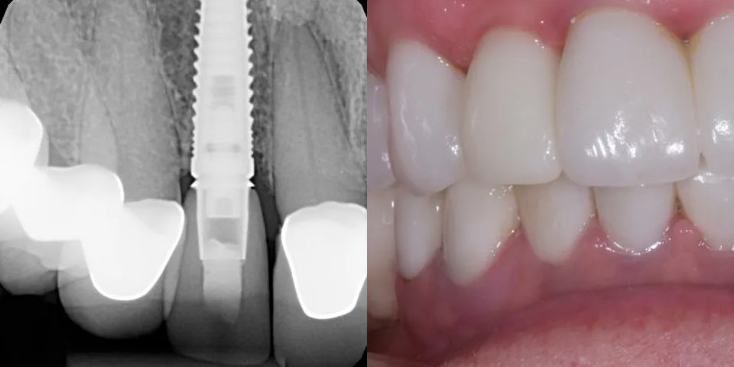
Before Treatment
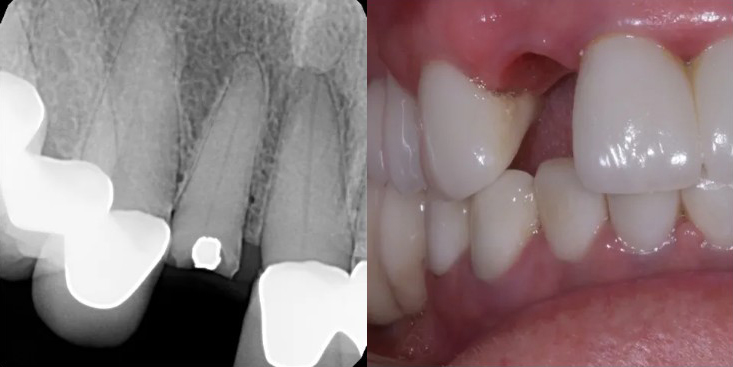
After Treatment
How We Plan and Place Your Dental Implants
Getting dental implants is a multi-step process, and knowing what to expect at each stage makes a real difference. Our team walks with you through every appointment with clear communication and no rushed decisions.
In-Office Imaging and a Detailed Exam
Before any treatment is discussed, we take a close look at what’s happening beneath the surface. Digital X-rays and in-office CT scans give our team a full 3D view of your jawbone, nerve pathways, and surrounding structures. That level of detail is what allows us to plan your treatment accurately and flag any concerns well before the procedure begins.
A Treatment Plan Designed Around Your Anatomy
Every patient’s jawbone, bite, and goals are different, and your implant plan reflects that. Our team reviews your imaging results with you, explains what they mean, and builds a treatment plan around your specific anatomy and preferences. If dental anxiety is a concern, sedation options are discussed at this stage so nothing about the process feels uncertain.
Precise Implant Placement Using Real-Time 3D Guidance
On the day of your procedure, X-Nav guided implant technology takes the guesswork out of placement entirely. This navigation system uses your pre-procedure scans to guide our team in real time, positioning each implant with a level of accuracy that isn’t possible with traditional methods. Patients typically experience less post-operative discomfort and a smoother recovery as a result.
Tracking Osseointegration at Every Follow-Up
The weeks following placement are when your implant begins bonding with the surrounding bone, and that process needs to be monitored closely. Our team will give you clear aftercare instructions and schedule follow-up visits to track how well osseointegration is progressing. Catching any issues early keeps your healing on track and protects the long-term stability of your implant.
Fitting Your Final Restoration for Function and Appearance
Once your implant has fully bonded with the bone, the final restoration is ready to be placed. Our team takes care to ensure your crown, bridge, or full arch denture fits precisely, functions naturally, and looks the way it should. Treatment isn’t considered complete until you’re satisfied with both how it feels and how it looks.
Why Choose Us for Dental Implants
This isn’t a routine cleaning. Implant placement is a surgical procedure that requires precision, experience, and the right technology to get lasting results. Our team includes a dentist with a fellowship from the Las Vegas Institute for full mouth reconstruction and active membership in the American Academy of Implant Dentistry. That kind of focused, implant-specific training is rare in the Black Hills region.
The technology at our practice supports every stage of your implant treatment. In-office CT scans, the Shining 3D facial and intraoral scanning system, and X-Nav computer navigation work together to give our team a complete, accurate picture of your mouth before a single incision is made. Everything is handled internally with no outside referrals needed. And for patients who have put off treatment because of anxiety, IV sedation is an option here that most providers in the area simply don’t offer.
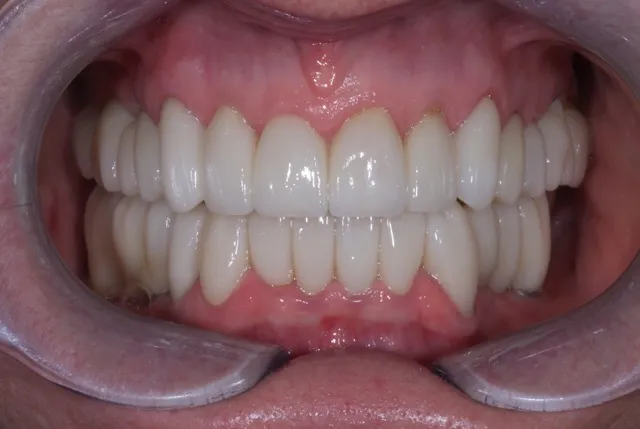
Benefits of Dental Implants with Dentures
STRONGER FIT
Implants prevent slippage and hold dentures securely in place.
LESS PAIN
Implants eliminate painful sore spots caused by denture pressure points.
STOP BONE LOSS
Implants prevent bone loss from denture use and help maintain your natural facial structure.
SPEAK CLEARLY
Implants secure dentures allowing you to naturally pronounce words.
Before Treatment
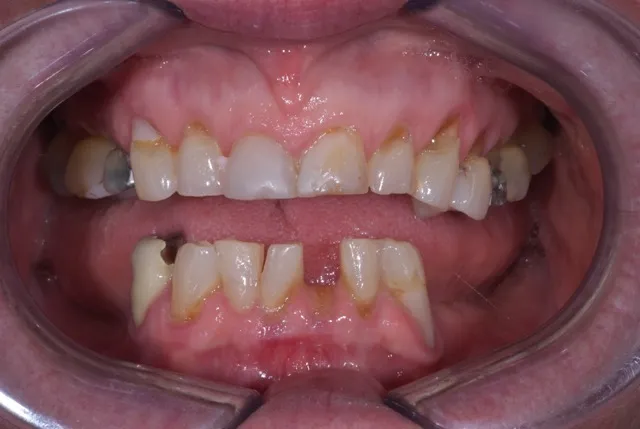
After Treatment

FAQs
How much are dental implants?
Treatment costs vary depending on how many teeth need to be replaced, what type of restoration is used, and whether preparatory work such as bone grafting is required. During your consultation, our team will review your plan and provide a clear breakdown before any work begins. We’re happy to answer any questions you have about making implants work for your situation.
What are dental implants?
Dental implants are small titanium posts placed into the jawbone that serve as a foundation for replacement teeth. After the post bonds with the surrounding bone, a custom crown, bridge, or denture is secured on top to restore function and appearance. They’re designed to be a permanent solution, not a temporary fix.
How long do dental implants last?
With proper care, dental implants are engineered to last a lifetime. The post itself is extremely durable once integrated, and rarely needs to be replaced. The restoration attached to it such as a crown may need updating after 10 to 15 years depending on wear, but the implant beneath it typically holds strong for decades.
Do dental implants hurt?
Most patients are surprised by how manageable the discomfort is. The procedure is performed under local anesthesia, and sedation options including IV sedation, nitrous oxide, and oral sedation are available for patients with dental anxiety. Post-procedure soreness typically resolves within a few days with over-the-counter pain relief and proper aftercare.
Are dental implants safe?
Yes. Dental implants have a long, well-documented track record of safety and success. They’re made from biocompatible titanium that the body accepts and integrates with naturally. As with any surgical procedure, there are risks, which our team will cover thoroughly during your consultation so you can move forward with confidence.
Restore Your Smile with Our Dental Implants
Our dental implants are one of the few treatments in dentistry that address tooth loss at its source, replacing the root structure that supports everything above it. That means real stability, real function, and results built to last. Our team is ready to walk you through your options honestly, answer every question you have, and confirm you feel confident before anything begins.
Find us on Google Maps for directions, or check out our patient reviews to hear directly from people who’ve been in your shoes. Loftus Dental is here to help you take the next step with confidence. Reach our team at 605.341.4521.